Everything you need to know about the NT
FREE Guide
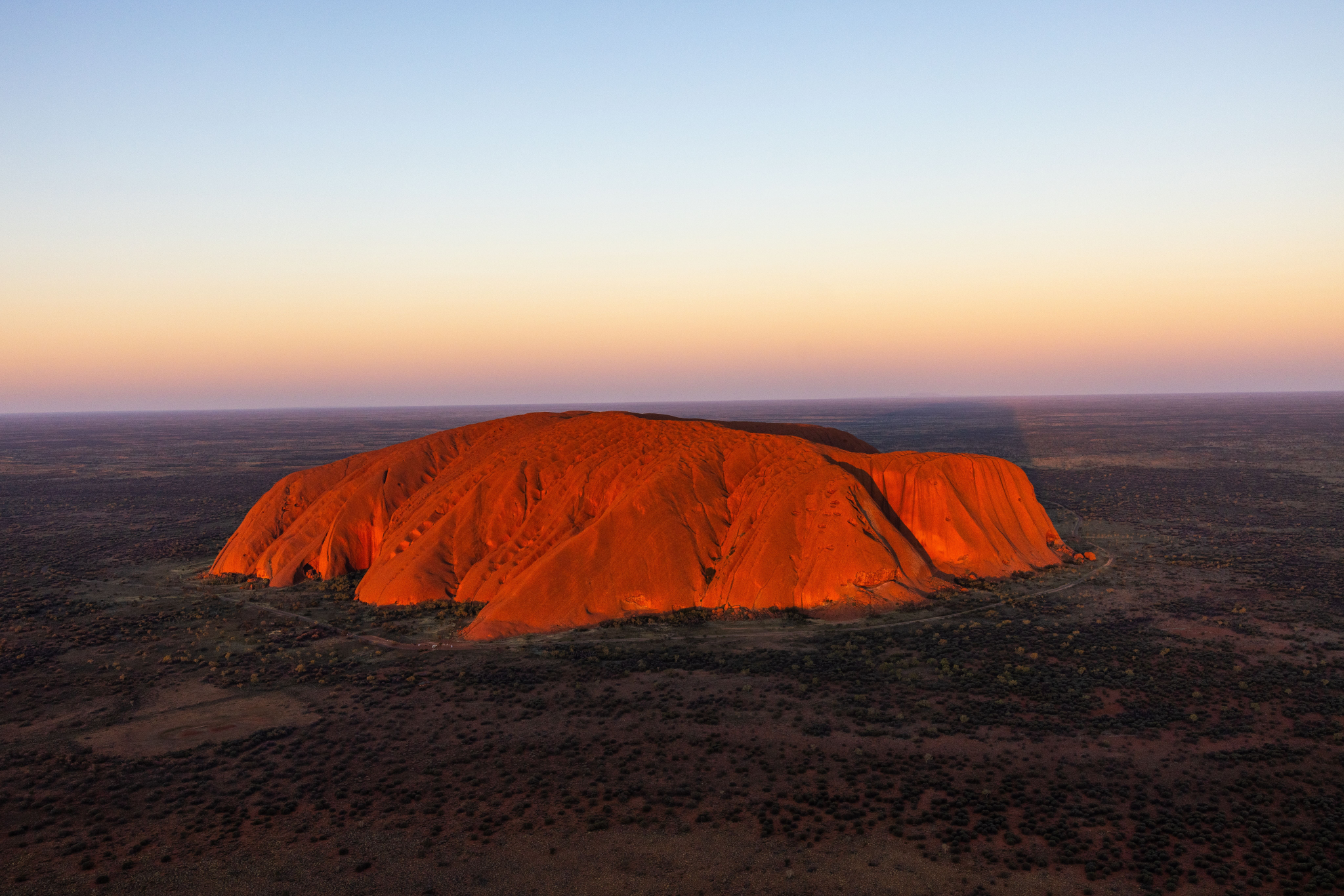
Uluru (Ayers Rock) is one of Australia’s most recognised landmarks. The sandstone masterpiece stands at 348m tall with a circumference of 9.4kms. There’s a reason this place is a world heritage treasure. A deeply spiritual site in the heart of Australia, it is thought that here, earth and memories exist as one.
Rich in indigenous culture, Uluru has a number of markings, caves and rock piles that tell the stories of the local tribes and their spiritual beliefs; learn more about their great significance at the cultural centre and hear about Aboriginal traditions associated with the rock. For an immersive experience, join a guided day trip that includes a visit to the Aboriginal Cultural Centre and sunset BBQ.
Sunrise and Sunset at the iconic and sacred Uluru is something not to be missed, witness the stunning change of colours at the heart of the Red Centre. Don’t miss the breathtaking Field of Light experience at dawn.
Embrace the culture, stories, and wisdom of the indigenous natives as you explore The Dreamtime. Revel in nature’s delights as it paints a canvas of magical sunsets and starlit skies each and every day. For the full Outback adventure, experience Uluru, Kata Tjuta and Kings Canyon on a 3-day camping trip or the premium 4-day Red Centre Icons Tour. Welcome to the magic of The Red Centre.
Immerse yourself in Australia's spiritual heart with this 4-day, 3-night Uluru and Kings Canyon adventure. Watch Uluru transform at sunrise and sunset, trek through Kata Tjuta's Valley of the Winds, discover Kings Canyon's Garden of Eden, and sleep under the clearest night skies in the Outback.
Experience Uluru, Kata Tjuta and Kings Canyon on a budget-friendly Outback adventure with guided hikes, epic sunsets and swag camping under the stars.
Join Autopia and see Australia's most significant spiritual landmarks while camping under starry skies on this 2 day 1 night Uluru and Kata Tjuta Tour.
Experience Uluru at sunset with guided base walks, Aboriginal Cultural Centre visit, and authentic Aussie BBQ dinner. Travel in air-conditioned comfort with expert guides sharing ancient stories of this sacred site.
With 36 towering domes, Kata Tjuta dominates the skies glowing at sunrise and sunset. Be sure to make time for the “Valley Of The Wind”. Weaving its way through 546m high formations, this hike delivers a sense of peace, tranquility, and being like no other. Lesser known than Uluru, but just as spectacular, this place is 500 million years in the making. Experience both iconic landmarks on a 2-day Uluru and Kata Tjuta tour.
Kings Canyon, home to the domes of a “lost city”, a Garden of Eden, and a Queen Of The Desert. What are you waiting for? Let’s go hiking. Suitable for most, it’s the first hundred or so steps that are the hardest, so don’t turn back. You will soon be revelling in some of the most beautiful nature made structures you may never have the chance to see again. Tick off the famous Rim Walk on a 3-day Rock The Centre Adventure or the 3-day Uluru Adventure Tour.
The gateway to the famous Red Centre and located at the base of the Macdonnell Ranges, there’s plenty of impressive landscape to be seen from the most famous outback town in Australia. Explore the stunning scenery on a West MacDonnell Ranges day tour or venture further on a 3-day Darwin to Alice Springs tour.
Home to the arts, traditional and new, it’s also home to many events. As a cultural epicentre, Alice Springs is a great starting point to any trip.
Perhaps the lesser known rock counterpart to Uluru, but no less stunning, a trip to Walpa Gorge is a must do. Boasting towering walls, rocky terrain, and surprising clusters of colourful greenery and pink daisies, walk the track while you are enamoured by its surreal characteristics and close to silent atmosphere. It’s also important to note that this particular spot is very special to the Anangu people so when taking pictures, they kindly request you keep both sides of the gorge in frame to avoid revealing any sacred spots. Visit Walpa Gorge as part of a 3-day Red Centre Rock Safari.
Another after-dark activity that needs to sit high on your to-do list is the jaw dropping Field Of Light, created by world-renowned artist Bruce Munro back in 2016. The exhibition originally named Tili Wiru Tjuta Nyakutjaku or ‘looking at lots of beautiful lights’ in local Pitjantjatjara is a fantasy garden of 50,000 spindles of light, glittering in a rainbow of colours, spanning 49,000 square metres of desert (around 75 footy fields).
After throwing back some canapes and champagne from the viewing platform nearby, go ahead and walk amongst the art. It will be one of the more special experiences you didn’t know you were after in Australia.
Most travellers spend 2–3 days at Uluru to take in the highlights without rushing. This gives you enough time to experience sunrise and sunset at the Rock, walk the 10.6km base trail, and explore Kata Tjuta’s Valley of the Winds. If you want to add Kings Canyon or the West MacDonnell Ranges, 4–5 days is the sweet spot.
April to September is the best time to visit Uluru, when temperatures are comfortable for walking – usually between 18–25°C during the day. Summer (November to March) sees extreme heat regularly topping 40°C, which makes hiking tough and can lead to activity closures. Desert mornings and evenings are cold year-round, so always pack layers.
No – climbing Uluru has been permanently closed since October 2019 out of deep respect for the Anangu people, to whom Uluru holds profound spiritual significance. There are plenty of other incredible ways to experience the Rock up close, including the base walk, guided cultural tours, and visits to the Uluru-Kata Tjuta Cultural Centre.
The easiest way is to fly into Ayers Rock Airport (AYQ), which has direct connections from Sydney, Melbourne, Brisbane, Adelaide, and Darwin. You can also drive from Alice Springs – it’s about a 4.5-hour trip along the Stuart and Lasseter Highways. Joining a guided tour is the most popular option for backpackers, as transport is all taken care of.
Heaps. Watch the Rock transform through a spectrum of colours at sunrise and sunset, explore the towering domes of Kata Tjuta, hike the rim at Kings Canyon, stroll through the surreal Field of Light installation, and dive deep into Anangu culture at the Uluru-Kata Tjuta Cultural Centre. There’s also the West MacDonnell Ranges and Walpa Gorge for those wanting to go further off the beaten track.
Absolutely – Uluru is one of the best destinations in Australia for solo travellers. Joining a small group tour is the easiest way to explore, with transport, accommodation, and guided experiences all sorted. You’ll naturally meet like-minded adventurers along the way, and the Red Centre has a way of bringing people together around a campfire under the stars.
Pack smart for the desert. Essentials include sturdy closed-toe shoes or hiking boots, a wide-brim hat, SPF50+ sunscreen, a 2L+ water bottle, and warm layers for chilly mornings and evenings. Insect repellent is a must, and a headlamp comes in handy for pre-dawn sunrise starts. A camera (or fully charged phone) is non-negotiable – the colours at sunrise and sunset are unlike anywhere else on earth.
Yes, entry to the Uluru-Kata Tjuta National Park requires a pass, which costs $38 AUD per adult and is valid for 3 consecutive days. If you’re on a guided tour with Happy Travels, park entry is typically included in your tour price, so check your inclusions before booking. It’s worth grabbing a multi-day pass if you plan to visit both Uluru and Kata Tjuta.
Kata Tjuta (also known as the Olgas) is a collection of 36 ancient domed rock formations sitting about 50km west of Uluru, and it’s absolutely worth the visit. The Valley of the Winds walk winds through towering 500-million-year-old formations and is considered by many travellers to be even more impressive than the Uluru base walk. It’s less crowded too, which makes it feel all the more special.
Yes, there are options for all fitness levels at Uluru. The Mala Walk (2km) and the Kuniya Walk (1km) are flat, easy trails suitable for most people, while the full 10.6km base walk is a longer but manageable circuit on level ground. The more challenging hikes, like Valley of the Winds at Kata Tjuta and Kings Canyon Rim Walk – require a moderate fitness level and good footwear.
Dive in and get inspired by our latest travel blogs